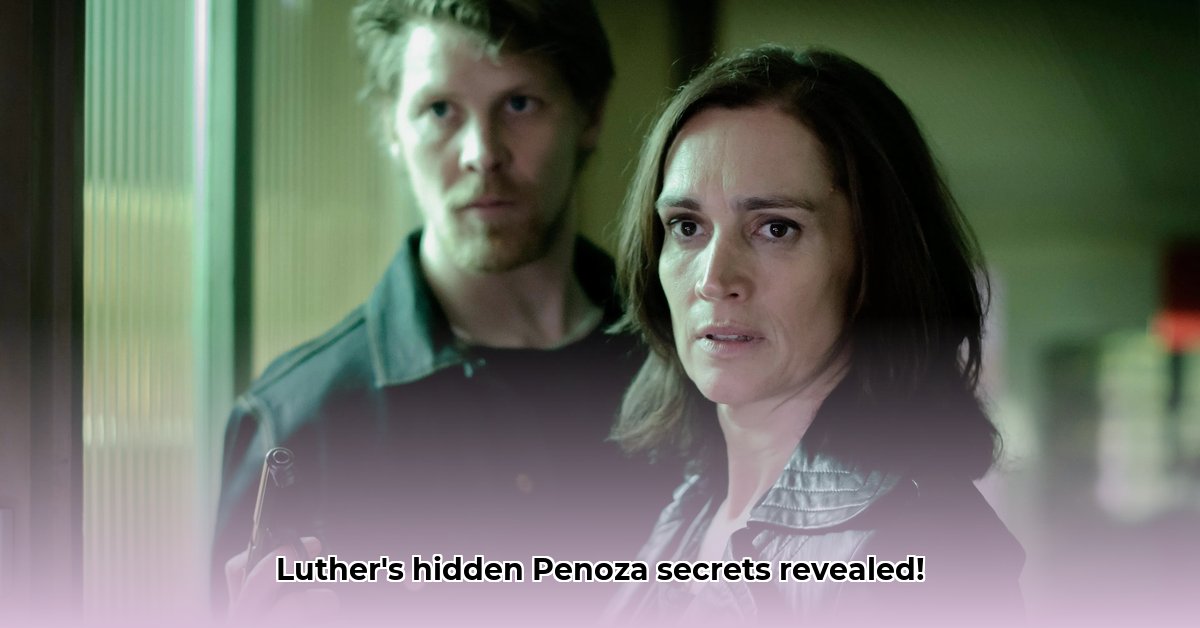
Luther: The Phenomenon That Was Penoza
Remember that bone-chilling stare? The one that could freeze hell over? That, eish, was Raymond Thiry as Luther in Penoza, the Dutch crime drama that took the country by storm. He wasn't just a villain; he was the villain, a captivating enigma that transcended the small screen and burrowed deep into the national consciousness. This isn't just a story about a TV character; it's a deep dive into a cultural phenomenon. We'll explore how Luther became a legend, the genius of Thiry’s performance, and his enduring impact on Dutch culture – even inspiring some oulike parents to name their kids after him! We’ll unpack the clever intricacies of his character, and look at what this means for the future of Dutch crime dramas. Can lightning strike twice? Is there another Luther lurking in the shadows? Let's delve into the secrets.
It wasn't just a fleeting moment of fame, nee. The creation of Doodstil, a spin-off centred entirely on Luther, proves his lasting appeal, his magnetic pull on the national psyche. Years later, Thiry still gets recognised as Luther – not just by adults, but by kids! How many characters achieve that level of iconic status? It's a testament to Luther's sheer power.
Unpacking the Character Arc: From Young Gun to Ruthless Kingpin
Luther’s journey wasn't a simple good-versus-evil narrative. It was a transformation, a slow burn of character development rarely seen in crime dramas. He begins as a brash young man, full of youthful bravado, but Penoza shows us his descent, the hardening that life – and his own choices – inflict. This gradual evolution is what makes him so compelling. He's a complex figure, a loving family man capable of chilling acts of violence, a walking contradiction of tenderness and ruthlessness. This inherent paradox is what captivated audiences.
They call it the "Swiebertje-effect" – the way Thiry’s portrayal has forever bound him to Luther, regardless of any other role he takes on. It's a masterclass in character development and its lingering impact. Was it the writing? The acting? A perfect alchemy of both? The question remains, and likely will for years to come. But it is a question worth asking, and one that underscores the impact this character had.
The Broader Impact: How Penoza Changed the Game
Penoza didn't just achieve popularity; it revolutionised the Dutch television landscape. It pushed boundaries, showcasing the power of character-driven narratives and leaving a lasting impact on the industry and the actors involved. Thiry's continued success is intimately intertwined with Luther's legacy. It’s a powerful example of a character reaching far beyond the constraints of the medium.
Looking ahead, the success of Doodstil points the way forward. We need a thorough analysis of its reception. Are there other spin-offs or sequels we could develop? Can we recapture that magic, that uniquely potent blend of character and story? That's the million-rand question. And a question that requires careful consideration. What are the risks and the rewards?
Navigating the Future: A Risk Assessment
Creating a sequel or spin-off always presents challenges. Let's examine the key risks involved:
| Risk Factor | Probability | Impact | Mitigation Strategy |
|---|---|---|---|
| Negative Doodstil Reception | Medium | Medium | Thorough market research; early engagement with viewers; flexible response to feedback. |
| Typecasting of Raymond Thiry | High | Medium | Encourage diverse roles; actively seek challenging scripts; public relations emphasizing range. |
| Loss of Cultural Relevance | Low | Low | Periodic re-releases; explore modern interpretations via new media; maintain social media presence. |
| Copyright/Distribution Issues | Low | High | Secure and maintain strong legal protection; proactive management of distribution rights. |
For Thiry, the challenge is to escape the Luther shadow while still capitalising on his iconic status. For Dutch television, it points towards continued investment in quality, risk-taking productions that explore complex characters and compelling stories. Penoza proved the appetite is there. The future looks bright, provided the correct steps are taken. The Penoza franchise is a goldmine waiting to be fully explored.
How Did Luther Redefine the Dutch Crime Drama Landscape?
Raymond Thiry’s portrayal of Luther wasn't just acting; it was a cultural phenomenon. His character resonated deeply, changing how we view villains in Dutch crime dramas. But how? Let's unpack the mystery of Luther.
The Paradox: Family Man and Ruthless Criminal
Luther wasn't your average villain. He was a blend of loyalty and ruthlessness, a complex moral ambiguity that defied expectations. A loving family man capable of brutal acts? It was this fascinating internal conflict that drew audiences in. His quiet intensity, his enigmatic nature – he's a man of few words, yet his actions spoke volumes. This mystery at the heart of his character, that unspoken question of his motivations, kept viewers hooked. It was like solving a puzzle, piece by piece.
From Sidekick to Star: Luther's Rise in Doodstil
Penoza initially presented Luther as a supporting character, barely hinting at the complexity within. Doodstil seized this opportunity, giving him a central role. The exploration of his traumatic past added layers of depth and understanding – layers that made it easier for audiences to truly connect with him, despite his actions.
It’s not simply the character arc; it's the impact on the genre itself. Luther's success shifted the focus. Multi-dimensional villains, flawed and human, became the norm. The "Swiebertje-effect" perfectly encapsulates Luther’s incredible impact. He transcended the typical villain trope, becoming a figure that resonated far beyond crime drama fans.
A Lasting Legacy: The Impact on Dutch Crime Drama
Luther's impact extends far beyond Penoza. His success has led to more nuanced characters in subsequent Dutch crime dramas. The demand for complex, morally ambiguous characters has increased dramatically. The old, one-dimensional villain simply isn't enough anymore.
This is more than a single character; it's a fundamental shift in how stories are told. The old, predictable formula was broken. Luther showed the way.
The Future of Luther and the Penoza Universe
What’s next for Luther? The possibilities are vast—spin-offs, further explorations of his past. But there are risks too. Maintaining the character's integrity, while expanding on his story, is essential if KRO-NCRV and the creative team want to build on Luther's legacy. The expectations are high, a testament to the enduring power of this fascinating character.
Key Takeaways:
- Luther's unique blend of loyalty and ruthlessness defied expectations.
- Doodstil successfully developed his backstory, adding layers of complexity.
- His impact demonstrates a shift toward more nuanced villains in Dutch crime dramas.
- His legacy inspires the continued exploration of morally grey characters.